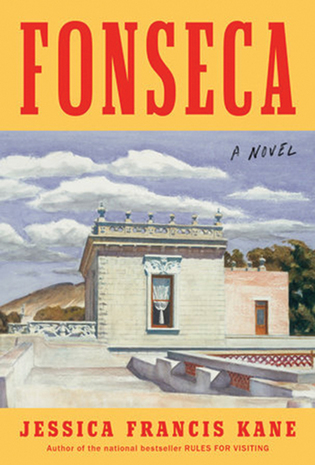
Fonseca
Jessica Francis Kane ’93
Penguin Press, $28
Reviewed by Debra Spark ’84
If you haven’t had a chance to read author Penelope Fitzgerald’s acclaimed novels, you might start not with the author but with her literary avatar, the protagonist of Jessica Francis Kane’s delightful novel Fonseca.
The action opens with a semi-fictional Penelope Fitzgerald and her sweet-natured six-year-old son Valpy, arriving in Mexico on the Day of the Dead in 1952, days after leaving their home in England. The pair have been summoned in a letter sent by the Delaneys, two elderly sisters-in-law distantly connected to Penelope’s family. They have suggested Valpy pay them a visit, with the implication that he could become their heir. An odd turn of events, but newly pregnant Penelope feels compelled to go. She and her (unfortunately alcoholic) husband are editors of a literary magazine, rich in talent but not cash. On arrival, though, Penelope finds a passel of needy houseguests as well as local petitioners who descend on the house regularly to swill cocktails and describe their own cash-strapped civic or artistic projects.
Thus begins an inventive book, a fun mashup of literary biography, vivid travelogue, and parlor room comedy. There’s even a celebrity sighting: Edward Hopper paints on the neighboring rooftop. And, at times, the literary-minded characters comment on the book’s plot lines. Penelope says at one point, “So the handsome stranger enters the fairy tale.” Later, her editor-husband observes, “I’m reminded of that old idea that there are only two kinds of stories: Someone goes on a journey and a stranger comes to town. It seems you are living both. Isn’t that remarkable.”
Fonseca’s chapters are interspersed with letters to an unnamed recipient, seemingly sent by Penelope’s adult children. Though friendly, these missives run counter to the prevailing narrative. How are we to understand all this? The answer is in Kane’s afterword, which is every bit as intriguing as the novel, and in the acknowledgements she concludes, “My greatest hope is that people will read Fonseca and then want to read all of Fitzgerald’s books.” People may feel equally compelled to read all of Kane’s.
Debra Spark ’84 is a professor of creative writing at Colby College. Her most recent novel is Discipline.
__________________________________________________________________
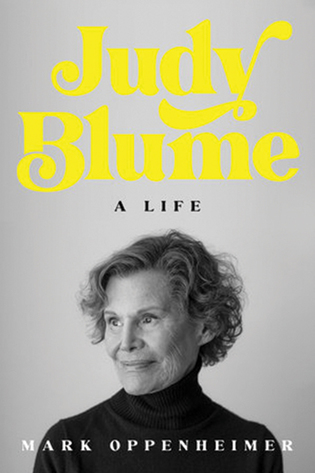
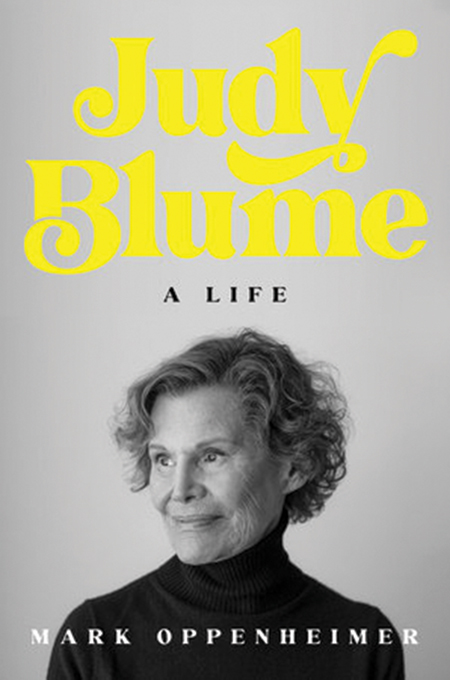
Judy Blume: A Life
Mark Oppenheimer ’96, ’03PHD
G. P. Putnam’s Sons, $35
Reviewed by Sylvia Brownrigg ’86
When a novel for children becomes a touchstone for a generation, it seems to exist almost separately from its creator. Judy Blume’s Are You There God? It’s Me, Margaret (1970) is such a touchstone—its heroine, Margaret Simon, a proxy for countless girls navigating puberty. Along with other hugely popular books including Then Again, Maybe I Won’t and Forever . . ., Blume transformed the culture for young American readers with her bold openness about bodies and sexuality and her warm, approachable humor.
Judy Blume has remained accessible to her adoring public, the subject of decades of profiles and a recent Amazon documentary, but Mark Oppenheimer’s is the first biography. Deeply researched, drawing on interviews with Blume and scores of friends and relations, the book lays out with dogged chronology the details of Judy Blume’s long life: her Jewish family and upbringing in New Jersey, her two children and three marriages, and her moves to New Mexico, New York, and Florida. All along, she has had to battle self-appointed moralists who objected to references to issues like periods, masturbation, and bullying.
Born in 1938 to middle-class Jewish parents, she was married by 1959; as a young mother, she enrolled in a writing class at NYU, at a time when novels like Harriet the Spy and The Outsiders were beginning to change the landscape. Her career started in an era when her husband could joke about Blume’s writing as something that “keeps her out of Saks”; in 1979 (when she got divorced—for the second time), Blume was receiving so many fan letters she had to hire someone to help answer them. Her novel for adults, Wifey, sold around two million copies in its first year.
The biography comes to a poetic close with Blume’s happy involvement with the 2023 film finally made of Are You There God? It’s Me, Margaret. Oppenheimer quotes Kelly Fremon Craig, the film’s director, recalling the excitement on set when Blume appeared. Cast and crew shared the feeling: “A legend is among us!”
Sylvia Brownrigg ’86 is the author, most recently, of The Whole Staggering Mystery: A Story of Fathers Lost and Found.
__________________________________________________________________
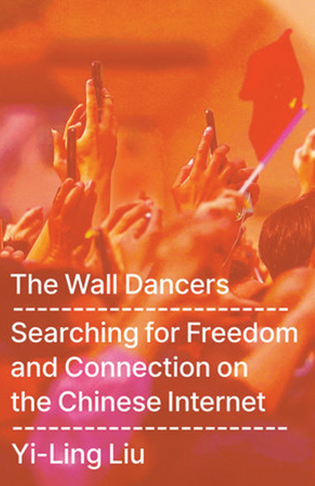
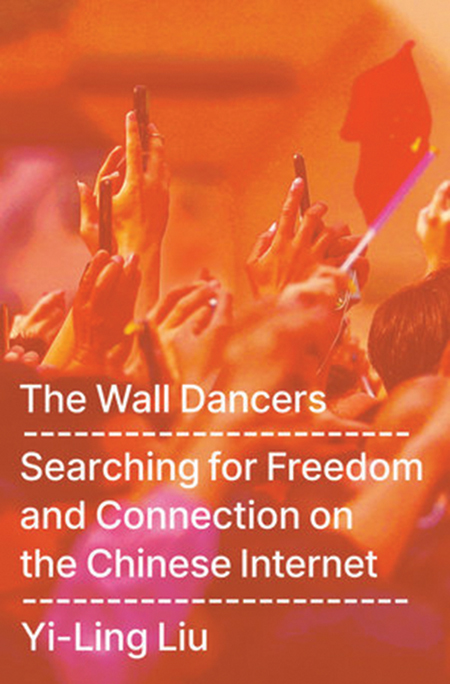
The Wall Dancers: Searching for Freedom and Connection on the Chinese Internet
Yi-Ling Liu ’17
Knopf, $30
Reviewed by Clay Shirky ’86
Many people outside China assume Beijing censors the internet to limit citizens’ access to information, but that is only a minor worry compared to their desire to limit citizens’ access to each other. Chinese social media is a far greater threat to the Party than Wikipedia is; the censorship apparatus is mainly concerned with preventing people inside China from sharing grievances and coordinating demands. And because collective action is easier among the like-minded, this means policing expressions of shared identity.
In Yi-Ling Liu’s terrific new book, The Wall Dancers, she traces China’s increasing hostility to online speech. (The title fuses the Great Firewall with the observation that people trying to create new culture in China are “dancing in shackles.”) After a remarkable flowering of online communities in the aughts, the Xi government began to crack down on queer activists and feminists, but also on science fiction writers and rappers, all people who see themselves as imagining a new world. Even social media users expressing concern for disasters get censored or drowned out as a danger to stability.
On the shelf of books about digital culture in China, Liu’s stands out; it is unusually grounded in human particulars. Despite the complex politics, economics, and technology involved, she explains what rising censorship and propaganda mean for the individuals trying to create communal spaces. The Wall Dancers is distressing and inspiring by turns, as a nationwide flowering of new cultures gives way to homogenization and trivialization of online community. Yet many of the people Liu profiles persist in imagining a freer future, even now.
Clay Shirky ’86 is vice provost for AI and technology in education at New York University.
 loading


 Print
Print Email
Email