
Eric Nyquist

Eric Nyquist
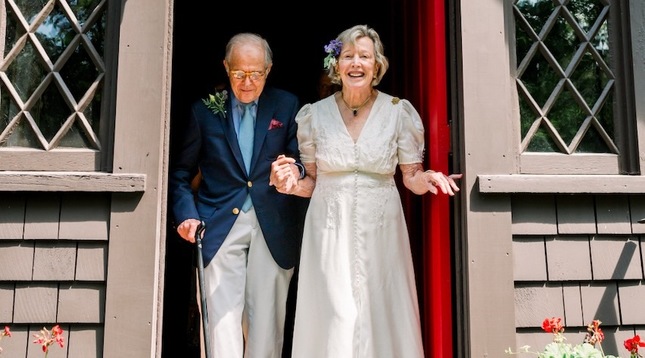
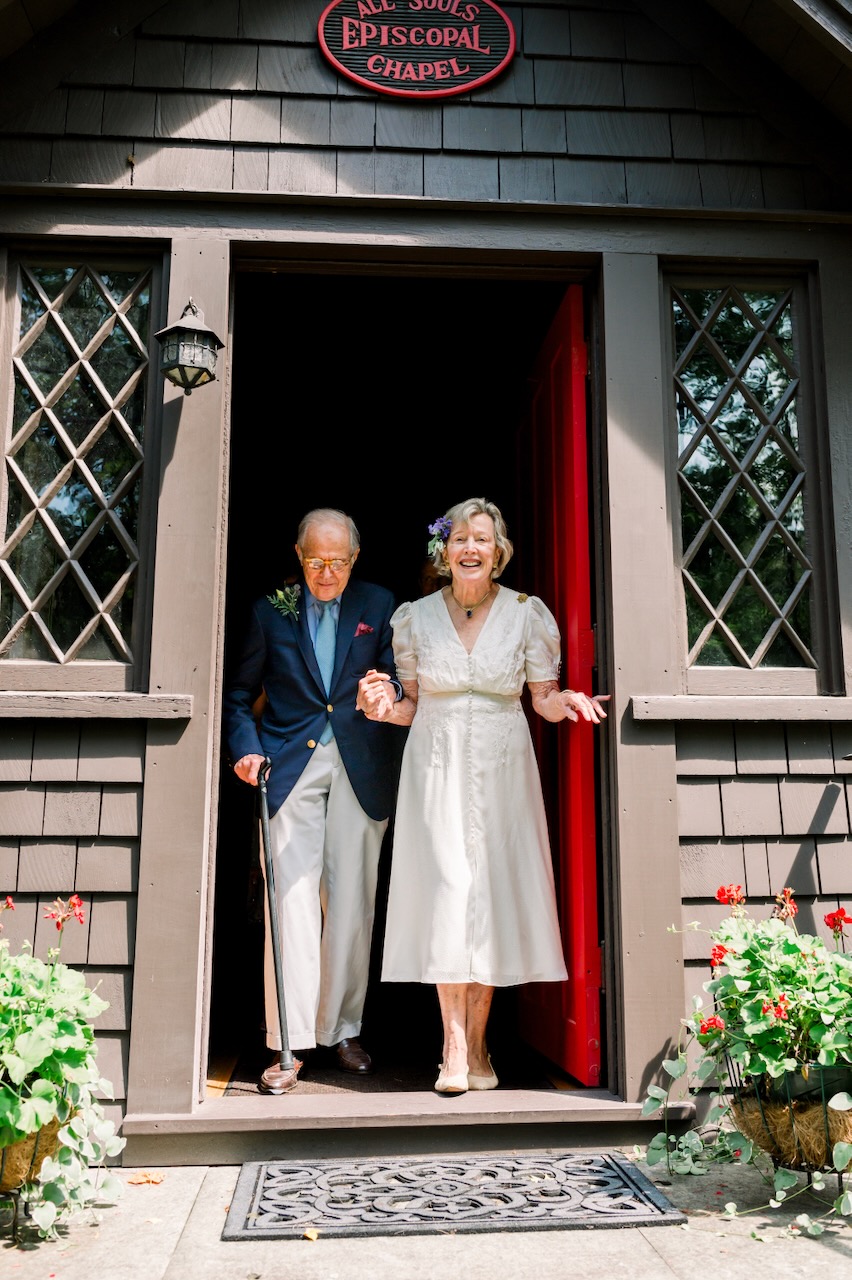
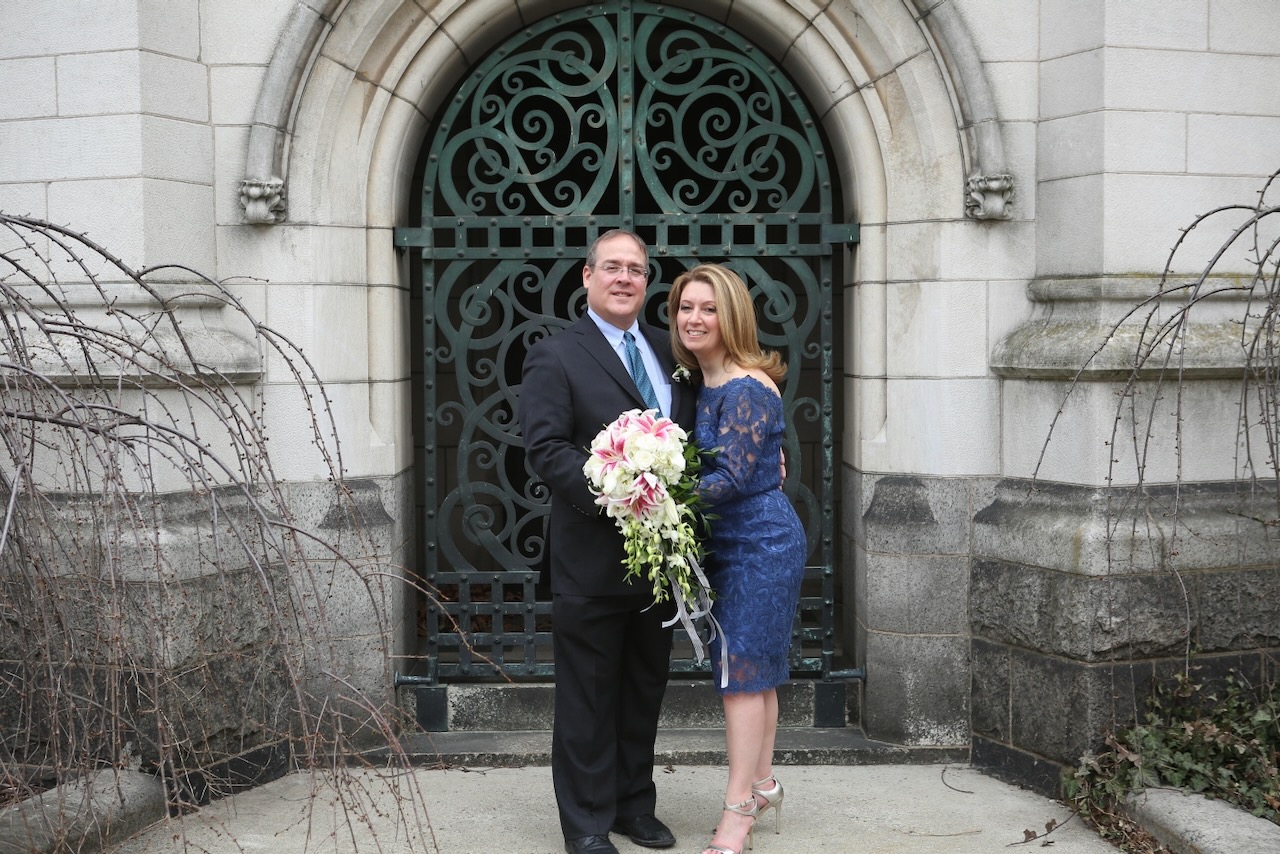
Donald M. Roberts ’57 met Sally Sonne, widow of Yale classmate Christian Sonne ’57, at their 65th reunion in 2022. They married in 2023.
View full image

Donald M. Roberts ’57 met Sally Sonne, widow of Yale classmate Christian Sonne ’57, at their 65th reunion in 2022. They married in 2023.
View full image
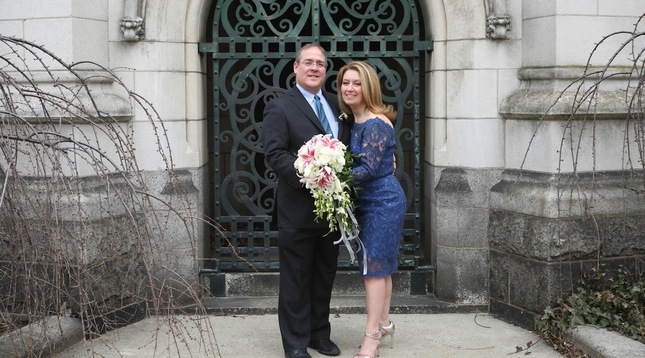
Carla Gochman Devillers ’85 and Joseph Vinetz ’85 rediscovered each other at their 30th reunion in 2015.
View full image

Carla Gochman Devillers ’85 and Joseph Vinetz ’85 rediscovered each other at their 30th reunion in 2015.
View full image
_851x473_0_81_645.jpeg)
Tara A. Owen ’88 and Malcolm Frank ’88 met at their 20th reunion in 2008 and officially blended their families—four children and two dogs—in 2011.
View full image
_851x473_0_81_82.jpeg)
Tara A. Owen ’88 and Malcolm Frank ’88 met at their 20th reunion in 2008 and officially blended their families—four children and two dogs—in 2011.
View full image
_960x533_0_399_645.jpeg)
David Ralph ’65 and Dorothy Armstrong, widow of a ’65 classmate, found each other through the ’65 alumni network when an email correspondence blossomed into romance.
View full image
_960x533_0_399_82.jpeg)
David Ralph ’65 and Dorothy Armstrong, widow of a ’65 classmate, found each other through the ’65 alumni network when an email correspondence blossomed into romance.
View full image
Some were widowed following a long marriage and were too old, they thought, to find a new partner. Some were content being single or thought they’d never again marry after a divorce. Some wanted a new partner but had never dated during college and didn’t think of campus as a place to launch a romance.
A significant number of Yale alumni have fallen in love and become couples after meeting at a reunion, years after they were undergraduates. They’re among a growing number of men and women who are choosing to marry or live together later in life. More than 30 percent of Americans over 40 are widowed, divorced, or have never been married, according to a 2022 Census survey, and record numbers of them are pairing up. One in six Americans ages 50 and older has used a dating app, according to a 2020 Pew Research Center report. It’s a chance to find a connection they might have once had but lost because of death or divorce, or never found before. And since they’re apt to have a clearer sense of what they want and need than when they were young, it’s an opportunity to do things better.
Yale graduates who met at a reunion or through their alumni network say they had an advantage. Their shared affiliation and common college experiences put them at ease and engendered trust. They could immediately share memories of a residence hall, a professor, or a campus activity. And since reunions inspire reflective and introspective conversations, they were able to more fully share their life experiences and who they were than they would have on a first date. What’s more, even if they hadn’t known one another as undergraduates, many had some mutual college friends who could vouch for them.
Here are four couples who met twenty or more years after they graduated and are now married or living together.
Donald M. Roberts ’57 and Sally Sonne
Don Roberts had been widowed three years earlier and thought he’d spend his 65th class reunion in 2022 with old friends. Then, at lunch, he found himself at a table with Sally Sonne, widow of Christian Sonne ’57, a classmate he hadn’t socialized with. She was telling others how earlier that day she’d gotten locked out of the dormitory room she was staying in and was still waiting for help getting access. “She was describing it as an adventure,” says Roberts, “and I liked her perseverance and sense of humor.”
After the reunion, Roberts was planning to meet a friend for lunch in Tuxedo Park, New York, where Sonne lived, and he invited her to join them. More lunches followed, and they learned how much they have in common. Roberts, though widowed once before, had been married to his second wife for 41 years, Sonne for 52. Their late spouses both had Alzheimer’s disease and died within a few months of one another, after they’d each cared for them at home for many years. Both have large and close families—Roberts has three adult children and Sonne has four with a combined 15 grandchildren. They love the outdoors and being active and, says Sonne, “we have similar reactions to people and situations.”
They realized they might have crossed paths earlier. Both have long-standing ties at Yale. Roberts in 2022 was awarded the Yale Medal by the Yale Alumni Association for leading the effort by the class of ’57 to endow and help formalize the School of Music’s Music in Schools Initiative. Since 1997, the program has enhanced music education for more than 1,000 New Haven public school students. Sonne’s daughter, brother, and father went to Yale and when her father (Bart Barnes ’29) was class secretary and in his nineties, she helped him compile the class notes.
But what perhaps surprised them most was their discovery that they weren’t just good companions, they were passionate about one another. “Our relationship isn’t just about the convenience of having one another close by. There really is chemistry and romance, and it’s wonderful,” says Sonne. She’s now 86 and Roberts is 90.
They married in August 2023 at a family wedding in the Adirondacks, with their children and grandchildren present.
Although some adult children worry about an older parent being taken advantage of by a new partner, they knew their children would be supportive. “They’re happy for us—and they’re relieved,” says Sonne. “They’re no longer worried that I’m living alone in a large house.”
Before he met her, Roberts—who before retiring had a long career in banking—decided that if he ever found a new partner he wanted someone who was close to him in age. “When you age, you have to give up things and it’s easier to grow older together,” he says. “We’re looking after one another, and there is something rewarding in that.” He regularly exercises on a treadmill but he’s no longer running marathons, and Sonne is no longer skiing. “There’s a tremendous amount of luck in people meeting and finding they have a real connection, and it’s pretty special when they’re older,” says Roberts.
Carla Gochman Devillers ’85 and Joseph Vinetz ’85
They met at a dinner at their 30th class reunion in 2015, where they sat at what they joke was “the children’s table” with other divorced and single alumni. Vinetz hadn’t ever been to a reunion but decided to attend because he was about to start a research sabbatical at the Yale School of Medicine. He recognized Devillers because they’d both been in Ezra Stiles College as undergraduates.
“She was beautiful and brilliant, and I wasn’t someone she’d notice,” he laughs.
“We were just in different crowds,” Devillers says.
But she remembered that Vinetz spent most of his time studying and practicing the clarinet, which he played in many campus music groups. At the reunion dinner, she learned he was a professor of medicine at the University of California–San Diego and researched infectious diseases. She worked in finance and asked if he had any research he’d like to commercialize. When he said he wanted to develop vaccines, she said, “maybe I could help you do that.”
Vinetz left the reunion early to fly to Peru, where he has a lab in the Amazon. While there, he and Devillers talked frequently on the phone, and on his return they met again in New Haven. Their date lasted 12 hours. They meandered all over campus and talked nonstop. Vinetz also gave Devillers presents from Peru, including a tumi—a knife that was used in ancient medicine to cut holes in skulls—for her daughter, then a premed student.
They appreciated one another more in their 50s than they had in their 20s. “We’d both grown up and had dealt with some hard things,” says Devillers, who’d lived in France before moving to New York and had been divorced for seven years. Adds Vinetz, who was finalizing a divorce, “we come from the same backgrounds and share the same values.”
Within a few months, they cofounded what eventually became Luna Bioscience Inc., which is developing a vaccine for leptospirosis, the most globally widespread zoonotic disease. Devillers is chief executive and Vinetz is senior scientist advisor.
They also had two weddings, the first in February 2016 at the New Haven City Hall after they’d picked up their marriage license for the religious ceremony they were planning. “Joe suddenly asked, ‘can someone here marry us now?’” says Devillers. “I was wearing jeans.” The following month, they wed again at the Slifka Center for Jewish Life at Yale. But they faced a difficult decision about where they’d live when Vinetz’s sabbatical ended and he had to return to his job in San Diego. Devillers and her son, then in middle school, moved with him for a year until Vinetz was named a professor at Yale in 2018.
Balancing a start-up company and a marriage can be intense, they agree. “It can be hard to turn off work with a start-up, but we communicate well and trust one another as business partners,” says Devillers. They’ve raised more than two million dollars in grant funding and are starting clinical trials for a leptospirosis vaccine for dogs. They also hope to produce a vaccine for the disease in humans.
Vinetz sometimes jokes that he married Devillers to give her the opportunity to run a biotech company, and she says she loves being an entrepreneur. But they most appreciate their compatibility as spouses and family. In addition to Devillers’ two children, Vinetz has a son who’s a composer. “Life is complicated and very rich,” says Vinetz.
Tara A. Owen ’88 and Malcolm Frank ’88
As undergraduates, neither Tara Owen nor Malcolm Frank had a boyfriend or girlfriend. She was “nerdy,” she says. He spent most of his time studying or playing defense for the varsity football team. But when they met at their 20th class reunion in 2008, they felt an immediate connection. “I was 42 and had resolved that perhaps I wasn’t meant for marriage, but I knew instantly Malcolm was the one worth waiting for,” says Owen.
Frank was carrying his six-year-old son on his shoulders when a mutual friend introduced him to Owen at the reunion. When she saw him later, after learning he was divorced and had three sons, she asked if he wanted to join her and some friends after dinner. They ended up sitting on a bench and talking outside Payne Whitney Gymnasium, where his sons were at Camp Bulldog, until chaperones delivered Frank’s children. “We met at the right time,” he says.
They became a long-distance couple while juggling demanding careers and parenting. Owen ran TAO Communications, which specializes in executive ghostwriting for chief executives, and was a single mother with a nine-year-old daughter in South Salem, New York. Frank was a senior executive at Cognizant, the information technology company, and his sons, then ages 11, 9, and 7, were living with him in Wellesley, Massachusetts. They got their wish to become a blended family in late August 2011, when Owen and her daughter, along with their two dogs, moved to Wellesley.
“It was a scramble,” she says. In addition to enrolling her daughter in school for seventh grade, “we had to find a house to rent with room for all of us, and I had to rent my home in New York for at least the school year and move us.”
Frank traveled often for business and Owen, to create better work and family balance, took a remote job at Booz & Company, heading executive communications for the CEO. She hired a “manny” who was a “terrific chef and great fun with the kids.” Together, Owen and Frank devised strategies to help their children bond. They created a homework room adjacent to the kitchen with four desks.
They married in December 2011 at the Yale Club in New York. Their children each did a reading, and Owen’s daughter sang. In 2012 they moved to South Salem, New York, to another new home, where they displayed a sign with house rules. Among these: “Keep your promises” and “Do what you love.”
“It helped that for both moves, we moved to new homes with room for all of us,” says Owen, and that both she and Frank share the same parenting values. “I was more the disciplinarian and Malcolm more the inspirational cheerleader, and we temper each other’s excesses,” she says.
But it was their desire to be with one another that most helped their efforts to create a blended family. Along with parenting, they’re keenly interested in one another’s work. “She has always understood the demands of my work,” says Frank, who’s currently founder and CEO of TalentGenius, chair of the board of FactSet, and a consultant.
They now live in St. Augustine, Florida, and their children are all launched. “We start every day by talking together for an hour—about everything from world events to what’s happening down the street—and we have to remind ourselves to stop. We could go on forever,” says Frank.
David Copley Ralph ’65 and Dorothy Ciner Armstrong
Some later-in-life relationships unfold at a slow pace. That was the case for David Ralph ’65 and Dorothy Armstrong, who met 20 years ago through the class of ’65’s alumni network.
After her husband, Forrest Armstrong ’65, died in 2000, Dorothy notified the class secretary, who posted a memoriam note and encouraged her to stay connected with Yale. She became active in the class’s widows network, and when she read in the alumni notes that Ralph’s wife had died in 2005, she sent him a condolence note. They began an email correspondence that lasted for nine months before they began talking on the phone and met in person.
Armstrong was living in Grand Rapids, Michigan, and teaching at the College of Education at Grand Valley State University. Ralph had retired as director of telecommunications at the State University of New York, New Paltz, and was planning to move full-time to his home in Stuart, Florida. They agreed to spend about one third of their time in Grand Rapids, one third in Florida, and one third traveling.
They bonded over their need to share their memories about their late spouses. Ralph sent Armstrong a newspaper story that described later-in-life couples who were widowed as having four people in their relationship. “We took this to mean that our time together would include and build upon the lives we had with our late spouses,” says Armstrong.
Armstrong also helped Ralph unearth his family history. He was clearing out and preparing to sell his home in Gardiner, New York, when they began corresponding. The garage was cluttered with bags filled with writings, photographs, and other belongings of his mother. She’d died when she was 39 and David was 2 years old, and he knew little about her. When he emailed Armstrong that he was thinking about throwing the bags out, she responded, “Don’t throw them out until you see what’s in them.” He followed her advice and discovered that his mother had been an artist and a published short-story writer.
He learned more when he and Armstrong began traveling together. In 2008, they went to several New England towns where his mother had been raised. At the town hall in Peabody, Massachusetts, they accidentally met one of his cousins, who introduced them to more relatives. They next traveled to Norway, where his great-grandparents had lived before immigrating to the US.
Armstrong retired in 2019; she and Ralph still divide their time between their homes. Their frank conversations about their relationships with their late spouses helped them shape what they want together. For Armstrong, it’s more independence. She married her late husband in Battell Chapel a few days after their college graduations. When she was widowed, she had to adjust to living on her own for the first time, and she wanted to maintain some independence after she met Ralph. They share expenses but keep some finances separate. They still honor their late spouses’ death anniversaries and last year, at the 60th reunion of the class of ’65, Armstrong read aloud names of deceased class members at the memorial service. Together they remain active in the class widows group.
 loading

 Print
Print Email
Email
.jpeg)
.jpeg)