Robert DeSanto
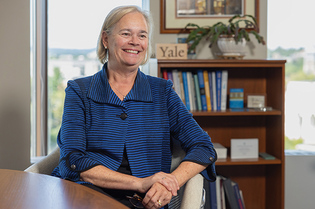
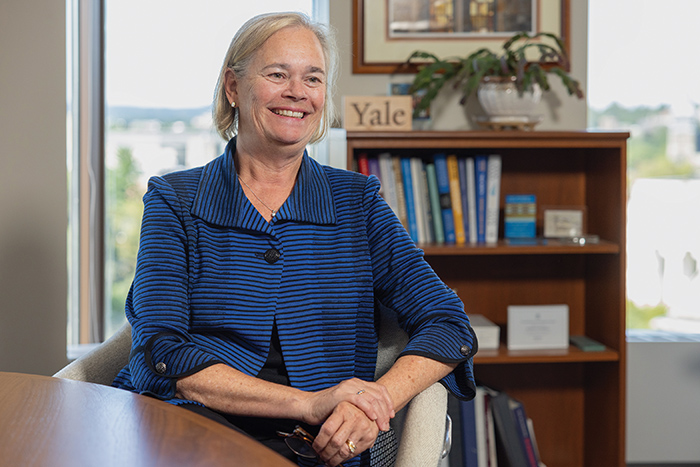
Joan O’Neill rose through the ranks to lead the development office for 14 years.
View full image
Back in 1987, when Joan O’Neill first joined Yale as assistant director of major gifts, the entire development office shared one computer terminal, some records were still kept on large index cards, and there was no GPS to rely on as she traveled through the South and Southwest to meet with alumni and donors.
Over time, O’Neill’s portfolio expanded. She led the major gifts, parent giving, planned giving, annual giving, and reunion giving programs, and she served as primary liaison to most of Yale’s school and unit development organizations. In 2012, she became vice president for development, and two years later Yale added alumni affairs to her portfolio. At the end of this year, she will retire after a career that has spanned nearly four decades and five Yale presidencies.
The numbers associated with O’Neill’s tenure are impressive: $3.88 billion during the Yale Tomorrow campaign that ended in 2011, and $7.46 billion in the recently concluded For Humanity campaign. (See page 20.) The launch of For Humanity during the pandemic, notes Alison Cole ’99, who works under O’Neill as executive director of the Yale Alumni Association, “shows one of Joan’s greatest strengths—her ability to remain unflappable under great pressure while moving us all toward our goals.”
“But Joan’s greatest legacy,” wrote President Maurie McInnis ’96PhD in June when she announced O’Neill’s retirement, “is the meaningful and enduring relationships she built with thousands of Yale alumni and friends.” O’Neill says that she is especially proud that her team has been able to deepen the engagement of those already connected to the Yale community, and to bring “more people into the fold” as volunteers and donors.
Making those connections involves understanding changes in how the different generations connect to the university. For instance, O’Neill says, previous generations—going back 50 years and more—more often contributed out of a sense of loyalty or gratitude for their own time at Yale. “Now,” she says, “our younger alums more often focus on the specific impact their gift will have.”
At a time of unprecedented attacks on the very idea of higher education and the role of universities, another focus of the For Humanity campaign was to build a friends network of people with no formal connection to Yale but who are interested in and see the benefits of the university’s work in areas ranging from clinical research to climate change. Whether they will be talking to fellow alumni or community members, O’Neill says, “We’re arming our volunteers with the information they need to tell the stories of the vital work being done here that has an impact way beyond this campus.”
In retirement, O’Neill is looking forward to more family time and some non-Yale travel. “I was privileged to have spent my career here and I felt supported all along as I balanced work and family,” she says. “Yale was a great place to work.”
 loading


 Print
 Email